

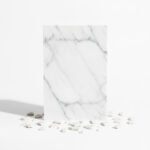
travertine stone
Discover how to source premium Iranian travertine stone directly from top quarries — Abbasabad, Hajiabad, and Mahallat. Full technical specs, ASTM standards, FOB pricing, and export logistics covered. Iranian Treasure handles end-to-end trade support for bulk buyers worldwide.

Description
Iran sits on one of the richest natural stone belts on earth. The Zagros and Alborz mountain formations, combined with ancient hydrothermal activity, have produced travertine deposits of exceptional density, chromatic range, and structural integrity. For stone wholesalers, contractors, and real estate developers sourcing at scale, Iranian travertine stone represents a rare intersection of aesthetic quality and commercial viability — if you know how to navigate the supply chain.
The challenge for most overseas buyers isn’t the stone itself. It’s sourcing transparency: knowing which quarry grade is entering your container, whether slabs were resin-filled under vacuum or simply surface-patched, and how to move goods from the quarry plateau to your destination port without unexpected delays or quality surprises. That’s precisely the gap Iranian Treasure was built to close.
What Makes Iranian Travertine Stone World-Renowned?
Travertine forms when calcium carbonate precipitates from geothermal groundwater, building up in horizontal layers over geological timescales. Iranian deposits — concentrated in Isfahan, Yazd, Markazi, and Fars provinces — formed under particularly favorable mineralization conditions, yielding stone with higher-than-average density and notably low thermal expansion coefficients. That matters for external cladding, flooring in temperature-variable climates, and pool surrounds.
Two cutting orientations define the visual language of the material:
- Vein-Cut (also called “split-face cut”): The block is sawn parallel to the natural bedding plane, revealing long, linear veining. This produces a formal, directional pattern — preferred in hotel lobbies, corporate foyers, and high-end residential flooring.
- Cross-Cut (Fleuri / Cloud Cut): Sawn perpendicular to the bed, exposing concentric, cloud-like swirls. More dramatic and organic, this orientation suits feature walls, reception desks, and landscape accents.
The vesicular texture — those characteristic pores and voids — is intrinsic to how the stone forms as gas bubbles escape during deposition. Iranian material tends toward tighter, more uniform pore distribution compared to many competing origins, which translates directly into lower resin consumption during processing and a cleaner finished surface.
Top Quarries and Grades of Iranian Travertine
Not all Iranian travertine is the same stone. Origin quarry, extraction zone within the quarry, block grade, and cutting direction each produce meaningfully different material.
Abbasabad Travertine (Isfahan Province)
Extracted from quarries near Abbasabad in Isfahan Province, this is among the most exported Iranian travertines globally. The Super White and Cream varieties offer a bright, luminous surface with tight, well-distributed pores and high block density. Compressive strength figures consistently exceed 90 MPa on certified test samples, making it a reliable choice for high-traffic floor applications. Color consistency per shipment is generally strong, though buyers should request color-sorted slab bundles for large-area installations.
Hajiabad Travertine (Yazd Province)
Hajiabad material is characterized by its bone-beige warmth, exceptionally tight pore structure, and among the highest compressive strength readings of any commercially extracted Iranian travertine — regularly testing above 95 MPa. Water absorption values below 0.5% are achievable in Grade A blocks, which makes it particularly competitive for exterior facades in humid climates. The tonal uniformity between vein-cut slabs makes large-panel facade work technically cleaner.
Silver Travertine (Mahallat / Kashan Region)
Mahallat, in Markazi Province, produces the grey and silver-toned travertines that have grown substantially in demand over the past decade, largely driven by contemporary architecture’s preference for cooler, neutral stone palettes. Silver travertine from this region carries smoky undertones, subtle blue-grey veining, and a distinctive visual depth after polishing. It performs well as a premium interior material and pairs effectively with exposed concrete and steel.
Red & Yellow Travertine (Azarshahr, East Azerbaijan Province)
Vivid in character, the red and yellow travertines from Azarshahr are geological outliers — their color comes from iron oxide mineral infiltration during formation. Used primarily for feature walls, landscape installations, garden paving, and decorative panels rather than large-floor applications. FOB pricing per square meter typically runs below the neutral-tone grades, though demand is more project-specific and seasonal.
Technical Specifications & Quality Standards
Buyers requesting material for commercial contracts should always reference ASTM C119 (standard terminology), ASTM C503 (dimension stone specifications), and ASTM C97 (water absorption and specific gravity) when writing purchase specifications. Below is a representative technical comparison across the primary grades:
| Parameter | Abbasabad Cream | Hajiabad Beige | Silver (Mahallat) | Azarshahr Red |
|---|---|---|---|---|
| Density (kg/m³) | 2,450 – 2,550 | 2,500 – 2,620 | 2,380 – 2,480 | 2,300 – 2,420 |
| Water Absorption (%) | 0.6 – 1.0 | 0.3 – 0.7 | 0.8 – 1.3 | 1.0 – 1.6 |
| Compressive Strength (MPa) | 88 – 102 | 95 – 115 | 78 – 94 | 65 – 82 |
| Porosity (%) | 3.5 – 5.5 | 2.5 – 4.2 | 5.0 – 7.5 | 6.5 – 9.0 |
| Flexural Strength (MPa) | 10 – 14 | 12 – 16 | 9 – 13 | 7 – 10 |
Available Surface Finishes:
- Polished: Mirror finish; maximizes color depth and vein clarity; suited for interior floors and walls.
- Honed: Matte-smooth; no gloss; preferred for commercial flooring and bathroom applications.
- Brushed: Lightly textured surface that accentuates the stone’s natural character; anti-slip properties.
- Tumbled: Aged, worn-edge appearance; popular for traditional and rustic design schemes.
- Resin-Filled + Polished: Standard export specification; open pores filled with UV-cured or polyester resin under vacuum before final polishing, producing a sealed, uniform surface.
All material supplied through Iranian Treasure is accompanied by a Certificate of Analysis (COA) with third-party laboratory results for the lot in question — not generic quarry averages.
Iranian Travertine vs. Turkish Travertine: A Commercial Comparison
Turkish travertine — primarily from the Denizli-Afyon corridor — dominates global market share by volume. That’s worth examining honestly rather than dismissing.
Turkish material ships quickly, with well-established freight infrastructure into European and North American ports. Processing capacity is large, container lead times are short, and buyer familiarity is high.
Where Iranian travertine holds a consistent technical edge:
Density and porosity: Grade A Iranian material, particularly from Hajiabad and Abbasabad quarries, generally tests at higher density and lower porosity than comparable Turkish grades at the same price point. That directly affects long-term stain resistance and maintenance cost in installed flooring.
Color range: Iran produces silver-grey and vivid iron-oxide tones — colors Turkish quarries do not replicate. For architects specifying distinctive stone palettes, this matters commercially.
Block size: Iranian gangsaw blocks tend to run larger on average, which means more usable yield per block, fewer waste cuts, and better continuity across large-area installations.
Price per m²: FOB pricing for Iranian travertine typically runs 15–30% below equivalent Turkish grades for comparable specifications. The differential widens further for thicker slabs (3cm+) where raw block cost becomes the dominant input.
The honest trade-off is logistics complexity. Iranian shipments require more detailed documentation preparation, payment structuring through LC or TT (often requiring a correspondent banking arrangement), and slightly longer transit times from Bandar Abbas compared to Turkish Aegean ports. For buyers willing to handle that overhead — or who work with a sourcing partner that handles it for them — the commercial case is strong.
Sourcing, Quality Inspection, and Packaging for Export
Stone quality is lost at three points: at extraction, at the processing plant, and in transit. A buyer who skips on-site verification at each stage is essentially accepting blind risk on a high-value shipment.
Quarry Inspection
Iranian Treasure conducts direct quarry inspections before committing any block to processing. Key checks include:
- Dry seams: Hairline separations within blocks that aren’t visible from the surface but cause slab failure during cutting. Detected by wet inspection and acoustic tapping.
- Micro-fissures: Subsurface fracture networks, often invisible until a slab is backlit or wetted. These are particularly relevant in silver travertine where color masking is stronger.
- Color sorting: Even within a single quarry, blocks vary in tone batch to batch. For large projects requiring color consistency, we sort and photograph blocks prior to gangsaw cutting and bundle matched material together.
Processing Standards
Slabs are produced on multi-blade gangsaws calibrated to ±0.5mm thickness tolerance. After cutting, material moves to resin-filling lines where open pores are filled under vacuum with polyester or UV-cured resin, then cured and ground flat before final polishing or honing. Surface calibration is checked at the finishing line and again before bundling.
Packaging
Export bundles use ISPM-15 heat-treated wooden crates, compliant with international phytosanitary requirements. Slabs are separated by polyethylene foam sheets to prevent edge chipping during vessel motion. Bundle dimensions are designed to maximize container utilization — standard 20’ and 40’ container configurations — while keeping individual bundle weights manageable for port handling equipment.
Pricing Factors and Export Logistics (FOB / CIF)
Several variables determine the final cost per square meter at origin:
Block grade: Grade A blocks (minimal veining interruption, no dry seams, consistent color) command a premium of typically 20–35% over Grade B/C material. For large-volume orders, mixed grades with careful sorting can optimize cost without compromising finished quality.
Slab thickness: 2cm material is the standard for interior wall and floor applications. 3cm is specified for heavy-traffic flooring and exterior paving. 4cm and above is used in countertops and specialty structural applications. Thicker material increases raw stone cost but doesn’t scale linearly — cutting and processing overheads are largely fixed.
Surface finish: Polished resin-filled commands the highest processing cost. Tumbled and brushed finishes involve additional mechanical processing steps. Honed sits below polished in total processing cost.
Epoxy and resin quality: UV-cured resins, though more expensive than standard polyester, don’t yellow over time and are non-toxic — relevant for food-service adjacent applications and LEED-sensitive projects.
Logistics route and terms:
Material moves from quarry sites (Mahallat is approximately 300km from Tehran; Hajiabad is near Yazd; Abbasabad is accessed via Isfahan) by truck to the processing plants, and then to Bandar Abbas — Iran’s primary export port on the Persian Gulf. Transit to Bandar Abbas adds 2–4 days of land logistics. Ocean freight from Bandar Abbas connects to major hub ports (Jebel Ali, Colombo, Port Klang, and onward) with typical transit times of 10–25 days depending on destination.
Standard export documentation includes: Commercial Invoice, Packing List, Bill of Lading, Certificate of Origin (Iranian Chamber of Commerce), and a third-party COA for the specific lot. FOB Bandar Abbas pricing is the most common trade term. CIF pricing to destination port is available for buyers who prefer consolidated freight cost — Iranian Treasure coordinates freight forwarding as part of the full-service offering.
Payment is typically processed via Letter of Credit (LC at sight or 30/60-day usance) or Telegraphic Transfer (TT — 30% advance, 70% against B/L copy), depending on buyer credit standing and order value.
How Iranian Treasure Simplifies Your Stone Import Process
Most of the complexity in sourcing Iranian natural stone isn’t geological — it’s logistical, relational, and administrative. Finding a reliable quarry is one problem. Verifying that what you agreed to is what actually goes into the container is another. Getting documents formatted correctly for your customs authority is a third. Then there’s negotiating freight, coordinating inspections, and ensuring your packaging spec is executed.
Iranian Treasure operates as a full-stack trade bridge, not a listing service. Here’s what that means in practice:
- Quarry access: Direct relationships with quarry operators across Isfahan, Yazd, Markazi, and East Azerbaijan, built over years of active sourcing. No middleman layers inflating your price or obscuring material provenance.
- Pre-shipment quality verification: Every order goes through physical inspection at the processing facility before containerization. We document slab count, dimensions, finish, and lot color against your specification — and send you photographic evidence before the container seals.
- Contract and payment support: We guide buyers through contract structuring, LC terms, and banking arrangements suitable for Iranian trade.
- Custom packaging: Your packaging specification — bundle size, foam sheet type, crate construction, labeling — is confirmed before production begins, not adjusted at the last minute.
- Freight and documentation: We coordinate with licensed freight forwarders for FCL and LCL shipments, and ensure all export documents — including Certificate of Origin, COA, and phytosanitary certificates for wooden packaging — are prepared correctly for the destination country.
For buyers considering a trade visit, we arrange factory tour itineraries covering processing plants and active quarry sites, with logistics, translation, and accommodation handled end-to-end.
Ready to Source? Request Your FOB Quote or Sample Package
If you’re evaluating Iranian travertine stone for a project or considering building a regular supply relationship, the next step is straightforward.
Iranian Treasure offers:
- Physical sample packs — 30×30cm polished and honed tiles from each origin quarry, with COA documentation, dispatched by courier.
- Technical COA by lot — Laboratory test results for density, water absorption, compressive strength, and porosity for the specific stock or production batch you’re considering.
- Product catalogue — Full range of available grades, finishes, standard sizes, and current FOB Bandar Abbas pricing per m².
- Direct FOB quote — Specify your required grade, thickness, finish, volume (m² or container count), and destination port, and we’ll return a complete commercial quote within 48 hours.
Contact the Iranian Treasure sourcing team via iraniantreasure.com to start the conversation. Whether you’re placing a trial container or sourcing for a multi-phase development, the same level of direct quarry access and trade support applies.
Reviews
There are no reviews yet.