
Why Importing Herbal Extracts from Iran is the Next Big Opportunity for New Traders

Walk into any pharmacy in Berlin, Toronto, or Tokyo today, and you’ll notice something different. The shelves that once exclusively displayed synthetic medicines now share space with botanical serums, herbal tinctures, and organic skincare formulations. This isn’t a trend—it’s a $400 billion global shift toward plant-based wellness, and the smart money is flowing toward those who control the supply chain at its source.
For new traders scanning the horizon for profitable business opportunities in herbal extract trade, the answer lies in an unexpected place: Iran. While most importers crowd around the usual suspects—India, China, or Turkey—a select group of entrepreneurs has quietly built fortunes by tapping into Iran’s centuries-old expertise in cultivating and processing some of the world’s most sought-after botanical ingredients. The question isn’t whether this opportunity exists. The question is: why haven’t you started yet?
What Makes Iranian Herbal Extracts Different? Geography Writes the Chemistry
Here’s something most business guides won’t tell you: the chemical composition of herbal extracts changes based on altitude, soil mineralization, and regional microclimates. Iran sits at the crossroads of three distinct climatic zones—Mediterranean coastlines, alpine highlands, and semi-arid plains—creating what botanists call “phytochemical diversity hotspots.”
Take Persian licorice root, for instance. When processed into glycyrrhizin extract, Iranian-grown roots consistently show 18-22% higher potency than their Chinese counterparts. Why? The Zagros Mountain slopes where these roots mature experience dramatic day-night temperature fluctuations that stress the plant—forcing it to produce more of the defensive compounds that pharmaceutical companies pay premium prices for.
Or consider Damask rose extract. The petals harvested at dawn in Kashan Province contain a specific ratio of citronellol to geraniol that perfume houses in Grasse, France consider irreplaceable for high-end fragrances. One distiller in Lyon once told me: “You can smell the difference between an Iranian rose otto and a Bulgarian one the moment you uncap the bottle—it’s like comparing a symphony to a ringtone.”
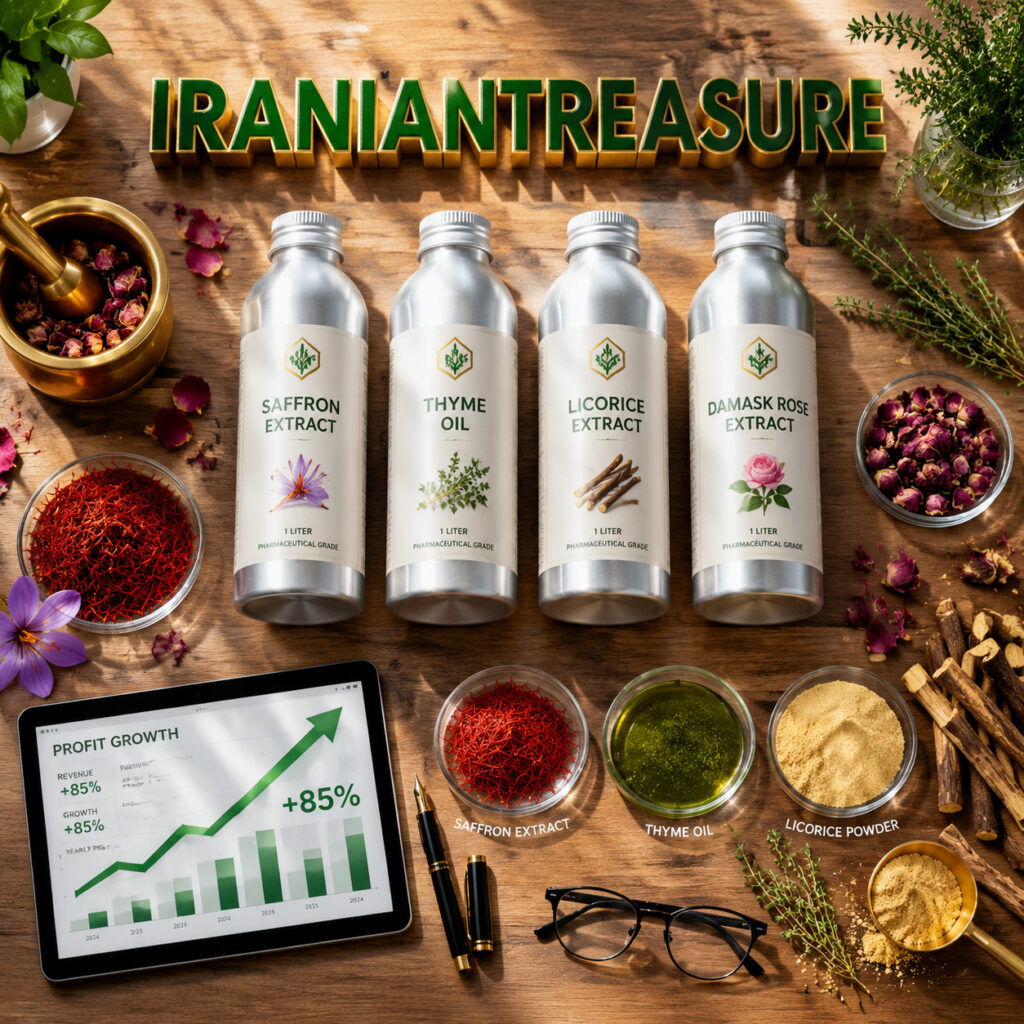
This isn’t marketing fluff. Independent lab certifications from SGS and Eurofins repeatedly confirm that Iranian saffron, thyme, and cumin extracts meet or exceed European Pharmacopoeia standards with fewer processing steps—meaning lower production costs and higher margins for traders who know where to source.
The Numbers That Matter: Profit Margins Beginners Can Actually Achieve
Let’s strip away the vague “huge potential” language and talk specifics. When you’re sourcing from Iran through established channels, here’s what realistic profit structures look like:
• Saffron Extract (standardized to 3% safranal):
FOB Iran price: 85–110/kg∣Europeanwholesale:85–110/kg | European wholesale: 280–340/kg | Your margin: 140–180%
• Licorice Root Extract (18% glycyrrhizin):
FOB Iran price: 22–28/kg∣USwellnessdistributors:22–28/kg | US wellness distributors: 75–95/kg | Your margin: 200–240%
• Damask Rose Absolute:
FOB Iran price: 3,200–3,800/kg∣Cosmeticformulators:3,200–3,800/kg | Cosmetic formulators: 8,500–11,000/kg | Your margin: 160–190%
• Black Cumin Seed Oil (cold-pressed):
FOB Iran price: 18–24/kg∣Healthfoodretailers:18–24/kg | Health food retailers: 62–78/kg | Your margin: 220–260%
Notice something? Even conservative estimates put you at 140%+ margins—and that’s before you optimize for direct buyer relationships or establish long-term contracts. One trader in Amsterdam started with a single 4,000shipmentofherbalteablendsin2022.Bymid−2024,hiscompanywasclearing4,000 shipment of herbal tea blends in 2022. By mid-2024, his company was clearing 18,000 monthly importing standardized extracts for European supplement manufacturers. His secret? He focused on low-risk international trading by starting with products that have pre-existing demand and established quality certifications.
Why Beginners Fail (And How to Avoid Their Mistakes)
The herbal extract business isn’t difficult—but it is precise. Most newcomers stumble on three predictable obstacles:
1. They Source Blindly
Ordering from Alibaba listings or trusting unverified suppliers leads to inconsistent batches, failed lab tests, and burned capital. Unlike manufactured goods, botanical extracts vary by harvest season. A reputable source maintains relationships with multiple farms and blends batches to achieve standardized potency—something you can’t verify from a product listing.
2. They Underestimate Documentation
Importing botanical extracts into the EU, US, or Canada requires phytosanitary certificates, Certificates of Analysis (CoA), and sometimes Novel Food authorizations. One missing document can hold your shipment at customs for weeks—or worse, result in rejection and disposal fees.
3. They Overextend on First Orders
The smell of opportunity leads many traders to place $20,000+ orders without testing the sales pipeline first. Smart traders start with mixed pallets of 50–100kg samples, validate buyer interest, then scale. This approach minimizes downside while you learn the rhythm of reorder cycles.
Profitable Business Opportunities in Herbal Extract Trade: The Realistic Path
Here’s where theory meets pavement. The most profitable business opportunities in herbal extract trade aren’t found in exotic, untested ingredients. They’re in serving established demand with superior sourcing and reliable logistics.
The Winning Formula:
Step 1: Identify Demand Gaps
Study your target market’s import data (available through Trade Map or national customs databases). Look for products with year-over-year growth but limited supplier diversity. Right now, adaptogenic extracts (Ashwagandha, Rhodiola, Tulsi) and clean-label colorants (saffron, turmeric oleoresin) show consistent 12–18% annual import increases across North America and Western Europe.
Step 2: Secure Certified Sources
This is where Iran Treasure becomes invaluable. Rather than cold-calling processors or navigating language barriers, you gain access to pre-vetted suppliers who maintain ISO 22000, HACCP, and organic certifications. Their team arranges lab testing, handles export documentation, and consolidates shipments—turning a six-month learning curve into a two-week setup process.
Step 3: Validate Before You Scale
Request 1–5kg samples with full CoA documentation. Send them to potential buyers or distributors in your target market. Secure letters of intent or trial orders. Only then commit to container-load shipments.
Step 4: Build Buyer Relationships, Not Just Transactions
The real money isn’t in one-off sales—it’s in becoming the reliable source that supplement formulators, cosmetic R&D labs, and food manufacturers call first. Once you’ve delivered three consecutive batches with consistent quality, you shift from vendor to partner. That’s when margins widen and payment terms improve.
The Iran Treasure Advantage: Why Going Solo Costs More Than It Saves
Let’s address the elephant in the room: Can’t you just find suppliers yourself and cut out intermediaries?
Technically, yes. Realistically? You’ll spend 6–9 months making expensive mistakes.
Here’s what you’re actually paying for when working with Iran Treasure (iraniantreasure.com):
- Pre-negotiated pricing: They consolidate orders across multiple clients, securing bulk rates you couldn’t access with your first $5,000 order.
- Quality arbitration: If a batch fails specs, they handle the dispute with the processor—in Farsi, with leverage. You get a replacement or refund without legal costs.
- Logistics fluency: They understand Incoterms, freight forwarder selection, and customs brokerage in both origin and destination markets. One wrong choice here can erase 30% of your margin.
- Market intelligence: Which extraction methods preserve bioactivity? Which certifications do German buyers prioritize over Dutch ones? This operational knowledge takes years to accumulate—or one phone call to access.
Think of it this way: A heart surgeon could theoretically rebuild their own car engine, but they hire a mechanic because expertise has value. Your expertise is in identifying market opportunities and building buyer relationships. Let specialists handle Iranian sourcing and export logistics.
De-Risking Your Entry: Start Small, Think Systematically
The beauty of wholesale herbal ingredients is that you don’t need $50,000 and a warehouse to begin. Here’s a proven low-risk entry model:
Month 1–2: Research and Relationship Building
- Analyze import trends in your target market
- Identify 3–5 high-demand extracts with stable pricing
- Connect with potential buyers (supplement brands, cosmetic labs, food manufacturers)
- Request sample quotations through Iran Treasure
Month 3: Sample Validation
- Order 1–5kg samples of your shortlisted products
- Obtain full CoA and send to potential buyers
- Secure at least one letter of intent for a trial order
Month 4–6: First Commercial Shipment
- Place initial order (typically 100–500kg across 2–3 products)
- Arrange payment terms (Letter of Credit or Escrow for first transactions)
- Manage customs clearance with destination-side broker
- Fulfill trial orders and collect feedback
Month 7+: Scale and Systematize
- Increase order volume based on reorder patterns
- Introduce complementary products
- Negotiate improved payment terms and pricing
- Consider private labeling or direct-to-consumer channels
The capital requirement for this model? Approximately $8,000–12,000 including samples, first shipment, and working capital buffer. Far less than launching most traditional businesses, with significantly faster breakeven timelines.
The Human Reality: What It Actually Feels Like to Trade Herbal Extracts
Before we get to the closing argument, let’s talk about the parts business articles usually skip.
Your first shipment will arrive, and you’ll open the container to the concentrated scent of whatever you’ve imported—thyme, rose, licorice. It’s overwhelming at first, almost medicinal. You’ll second-guess whether you’ve made a mistake until the lab confirms the specs match exactly what you ordered.
Your first buyer meeting will involve discussions about “hexane-free extraction” and “HPTLC fingerprinting”—terms you didn’t know six months ago. You’ll feel like an imposter until you realize your buyer expects you to be a logistics bridge, not a botanist. They need reliability, documentation, and consistent supply. You can deliver that.
Your first reorder—maybe three months after the initial shipment—will feel like validation. Someone chose to buy from you again instead of searching for a cheaper alternative. That’s when you’ll realize you’ve built something real: a position in a supply chain that moves billions of dollars annually.
The Bottom Line: This Window Won’t Stay Open Forever
The profitable business opportunities in herbal extract trade from Iran exist today because of three converging factors: rising global demand for botanical ingredients, underutilized sourcing channels, and accessible trade facilitation services like Iran Treasure.
But market inefficiencies don’t last. As more traders discover these margins, competition will tighten, and price advantages will compress. The entrepreneurs who move now—while established importers remain focused on conventional origins—will build supplier relationships and buyer networks that become defensible advantages.
Here’s where the real money is made: not in chasing the next exotic superfood, but in becoming the reliable source for ingredients that formulators already want, from a region that offers superior quality at exceptional value. You don’t need to reinvent anything. You need to execute with precision and partner with people who’ve already solved the operational complexities.
If you’re serious about entering international trade without risking catastrophic losses, sourcing from Iran through structured channels offers one of the clearest risk-reward ratios available today. The question was never whether the opportunity exists. The question is whether you’ll act while the margins are still this attractive.
Quick-Reference Summary: Key Takeaways for New Traders
• Geographic Advantage: Iran’s diverse microclimates produce herbal extracts with superior phytochemical profiles
• Margin Reality: Expect 140–260% wholesale margins on properly sourced, certified extracts
• Common Pitfalls: Blind sourcing, documentation gaps, and oversized first orders account for 80% of beginner failures
• Smart Entry Model: Start with $8–12K capital, sample validation, and strategic partnerships like Iran Treasure
• Risk Mitigation: Use structured sourcing, established logistics partners, and Letters of Credit for first transactions
• Growth Path: Focus on serving existing demand for certified ingredients rather than chasing unproven novelties
• Timeline: 6-month path from research to profitable recurring revenue is realistic with proper execution
The herbal extract trade isn’t a get-rich-quick scheme—it’s a legitimate international business model with documented success cases and transparent economics. The traders winning in this space aren’t the ones with the most capital or the deepest industry experience. They’re the ones who moved decisively when the opportunity became clear.
That opportunity is clear right now.